
The official Property Information Portal opens with address and BBL search choices.
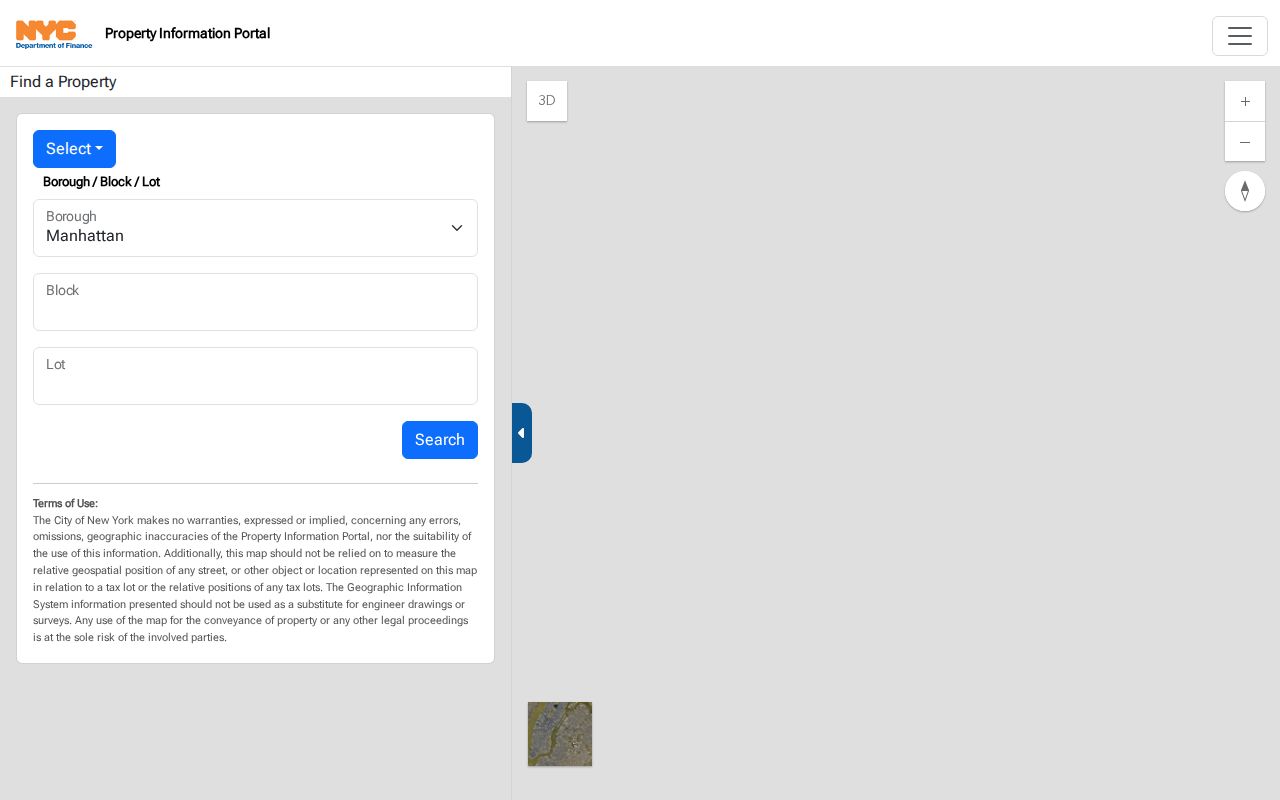
The selected parcel can then be matched to clerk, assessment, tax, and map records.
How to Search Richmond County Property Records
Richmond County official record details
Richmond County official record details
- Richmond County official record details
- Richmond County official record details
- Richmond County official record details
- Richmond County official record details
- Richmond County official record details
Richmond County Property Records Offices
Richmond County official record details
Richmond County Recorder / Register of Deeds
Richmond County official record details
Richmond County official record details, NY Richmond County official record details
(718) 675-7700
Richmond County Assessor / Appraisal District
Richmond County official record details
Richmond County official record details, NY Richmond County official record details
(718) 675-7700
Richmond County Treasurer / Tax Collector
Richmond County official record details
Richmond County official record details, NY Richmond County official record details
(718) 675-7700
Types of Richmond County Property Records
Richmond County official record details
| Record Type | What It Documents | Kept By | Access |
|---|---|---|---|
| Deeds | Richmond County official record details | Richmond County official record details | Richmond County official record details |
| Mortgages & liens | Richmond County official record details | Richmond County official record details | Richmond County official record details |
| Tax & assessment | Richmond County official record details | Richmond County official record details | Richmond County official record details |
| Plats & parcels | Richmond County official record details | Richmond County official record details | Richmond County official record details |
| Building permits | Richmond County official record details | Richmond County official record details | Richmond County official record details |
Richmond County official record details
What Richmond County Property Records Can and Cannot Tell You
Richmond County official record details
Lawful use. Richmond County official record details
Richmond County Is Staten Island's Records County
Richmond County and the Borough of Staten Island occupy the same ground. Their property systems use both names. The recording office here is the Richmond County Clerk. It is not a City Register branch. That distinction matters. A guide written for Manhattan, Brooklyn, Queens, or the Bronx may point to ACRIS. For Staten Island deeds, mortgages, liens, releases, easements, and notices of pendency, the county land-document index settles it. The county land-document index is the proper confirmation source. The clerk's office at 130 Stuyvesant Place also serves walk-ins who need an old book, a correction, or a certified copy. The public index cannot supply those.
The citywide Department of Finance systems still do the rest. They provide assessment, tax-account, sales, exemption, and digital tax-map data. A useful Richmond County property records search therefore joins two systems. Department of Finance covers the parcel. The County Clerk covers the instrument. Neither replaces the other.
Start a Richmond County Search With the Borough 5 BBL
Staten Island is borough 5 in New York City's borough-block-lot system. Search an address in the Property Information Portal. Pick the correct suggested address. Save the BBL shown for the lot. That identifier stays useful when a street name, mailing address, condo unit, or building entrance creates confusion, and it links the tax map, assessment account, recent sales, and recorded-document research in one thread.
- Find the address in the Property Information Portal and confirm the highlighted lot.
- Record borough 5, the block, the lot, and any associated lot shown.
- Use the block and lot in the Richmond County Clerk parcel search.
- Check the Department of Finance tax account and assessment cards for the same BBL.
- Compare the current map with Tax Map History if a merger or subdivision is suspected.
A situs address identifies the physical property. A billing name and mailing address tell the Department of Finance where account notices go. Treat those fields as separate clues rather than assuming they point to the same place or person.
What Richmond County Property Information Cards Contain
The Property Information Portal is more than a map. Its cards can show basic property and land facts, buildings, assessment history, exemptions, sales, mortgages and liens, other recorded-document leads, tax-map history, and neighborhood or district context. Assessment history runs ten years. Sales and document cards may display up to fifty rows. Those lists are strong leads. Still, a row in a city data card never substitutes for reading the County Clerk's recorded instrument itself.
Keep the record date. PIP application data is described as updating near month end, while the annual assessment roll follows a January 5 taxable-status date. A newly recorded deed can reach the clerk before an owner or billing field refreshes.
Old Staten Island Deeds Need a Time-Aware Search
Richmond County's recording history reaches back to 1683. That was long before the 1898 consolidation of New York City. Modern addresses and lots do not always map cleanly onto an old farm, village, or street name. A parent tract can frustrate the same way. For pre-1966 Staten Island material, official city guidance sends researchers to the Richmond County Clerk. FamilySearch's New York Land Records collection covers 1630 through 1975. It can help locate scanned deed, mortgage, grant, and index volumes. Access conditions may vary.
Work backward from the latest deed. Note the grantor, grantee, date, book and page or document identifier, legal description, and BBL. Then search the prior grantee as a buyer and repeat. If a current lot was split from a parent, keep the former BBL handy. Compare historical tax-map PDFs side by side. Abutters and lot dimensions often bridge the gap when a historic address has vanished.
Assessment, Market Estimate, Taxable Value, and Sale Price
These figures answer different questions. Department of Finance market value is an estimate used in the assessment process. Assessed value applies the city's assessment level, generally 6 percent for tax class 1 and 45 percent for classes 2 through 4, subject to statutory limits and transitional rules. Taxable value reflects benefits such as exemptions. A deed or sales card may show transaction consideration. That amount is not automatically an open-market appraisal.
The Notice of Property Value arrives during the annual cycle, with a January 5 status date and a fiscal year that begins in July. The tax account adds charges, credits, interest, payments, bills, and statements. Owners challenging value use the New York City Tax Commission process and the form suited to their property class. These are related records. A tax bill should never be read as a current asking price.
Maps, Zoning, and Buildings Add Separate Evidence
PIP supplies the digital tax map and lot history. ZoLa adds zoning districts, overlays, split-lot conditions, and historic map context. BIS and DOB NOW divide building history between legacy and newer records. So a careful search may need both systems. PLUTO and MapPLUTO provide downloadable planning data. But their building and property information is updated on a different schedule from clerk recordings and tax accounts.
None of these map lines is a survey. Use them to identify a parcel, see adjoining lots, and spot changes worth investigating. A licensed survey and the deed's legal description remain the stronger tools for a disputed boundary.
Richmond County Access, Copies, and Privacy Limits
New York's FOIL law governs requests for records an agency already holds. An agency must acknowledge or respond within five business days. Paper copies up to 9 by 14 inches are generally capped at twenty-five cents per page unless another statute overrides that figure. Other formats can carry actual reproduction costs. One limit matters. FOIL does not force an office to build a new report. Nor does it answer a research question for you.
Privacy rules carve out some addresses. A substitute address filed through New York's Address Confidentiality Program is one example. Voter lookup is a self-match tool, not an open owner directory. Use Richmond County property records for title history, tax review, boundary work, and civic research. Never use them to track or harass a person. When a finding carries real consequences, verify it. Use the office that keeps the original record.
Building and Permit History Across Staten Island
Ownership and taxes never tell the whole story of a Staten Island property. Building records for New York City live in two places. The legacy Building Information System holds older applications, complaints, violations, permits, and certificates. DOB NOW carries the newer transactions and public status tools. Search the same address, BBL, and Building Identification Number in both. An empty result means little. The work may belong to the other system's era. It may also sit under a different lot or address spelling.
Line up each permit date with the deed chain and the assessment's building facts. Then add old map evidence. A new structure, an alteration, or a demolition can explain a sudden shift in the tax roll. So can a certificate. Plans are a separate matter. They do not always appear on the same public screen as the permit index. Use the Department of Buildings access route or a FOIL request for any existing record that is not published.
Richmond County Foreclosure and Lien Signals
Trouble on a parcel shows up in stages. A delinquent tax balance, a lien-sale listing, a recorded lien, a notice of pendency, and a foreclosure judgment each sit with a different custodian. Each of those signals sits with a different custodian. Start with the live DOF account for charges and payments. Then check the County Clerk for recorded instruments, assignments, satisfactions, and releases. A lis pendens or court case points you to NYSCEF or WebCivil Supreme for the docket and its current status. There you can read the docket and its current status. A federal matter may require PACER for the Eastern District of New York.
Do not jump to conclusions. An old delinquency may have been paid. A filed case may have ended without a transfer. Later credits, releases, discontinuances, judgments, and deeds all change the picture. Note the date and status of every item, then search forward for whatever resolved it.
Researching Staten Island House History Beyond the Deed
A deed chain only goes so far. Directories, archives, and family-history sources add the people behind Richmond County parcels. The New York Public Library offers a scanned 1933-34 Polk's Staten Island directory. The Staten Island Museum's ACEGen project and its collections hold local directory and family-history material. Municipal Archives holdings add historic vital records. They also hold other city collections under their own access rules. These sources can tie a person or business to an address. They never replace the recorded conveyance itself.
For an older property, build a timeline. Combine deed dates with tax-map changes, building events, directory entries, and historic names. Cite exactly what each source says. Mark the gaps openly. That approach suits Richmond County's long record history. Forcing modern street and parcel language onto colonial or pre-consolidation documents distorts what they actually recorded.
Recheck Richmond County Sources Before Relying on Them
Public systems refresh on their own schedules. Two sites can carry data from different vintages on the same day. Record the inspection date, the query, the BBL, the fiscal year, and the document identifier every time. When a result matters, reopen the live custodian page. Look for a later deed, a map change, a payment, a correction, or a building action. This recheck discipline matters most for current ownership, balances, pending litigation, and adjacent parcels, because each can move while the other systems lag behind.
A complete Richmond County property file is a dated body of evidence, not one screenshot. The County Clerk confirms recorded instruments. DOF explains assessment and tax administration. Planning supplies zoning context, and Buildings supplies work history. Leave title, survey, and appraisal conclusions to a licensed professional working beyond the public record.